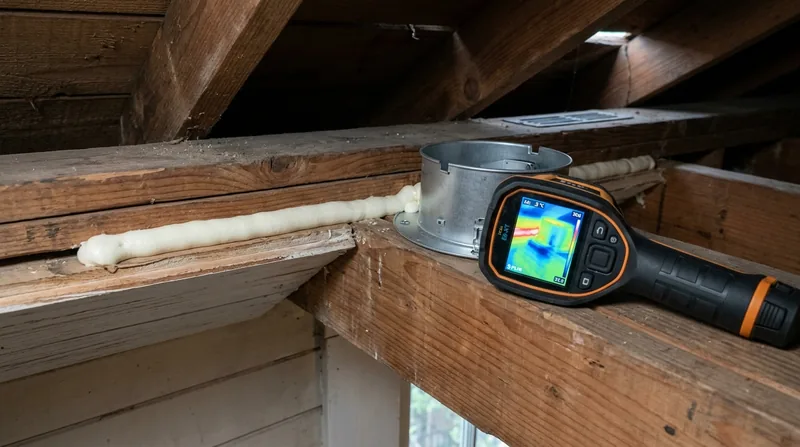




Austin's vented attics and crawl spaces leak cooled air through top plates, can lights, chases, attic hatches, and rim joists faster than most homeowners realize. Summer temperatures in those spaces hit 140 to 160 degrees Fahrenheit, and the pressure difference between a conditioned house and a 150-degree attic forces air out through every unsealed penetration. Air sealing in Austin stops that leak before it becomes a $200-a-month energy bill problem. The work is straightforward: we locate and seal the leaks with spray foam or caulk, then add insulation on top. It costs less than new ductwork, less than a new air conditioning unit, and it delivers comfort and savings on the first hot day. This is the first fix an energy audit points to, and the cheapest way to reclaim the performance of every R-value you already have.
Why Air Sealing Matters in Austin's Hot Attics and Crawl Spaces
Austin sits on the Balcones Escarpment where limestone hills drop to flat prairie, and nearly every home in the city has either a vented attic or a pier-and-beam crawl space. Both leak. A vented attic in Austin runs 140 to 160 degrees on a typical summer day, and that heat drives air out through unsealed top plates, electrical chases, can light fixtures, and attic hatches. A pier-and-beam crawl space under a 1950s ranch in Brentwood or a historic Craftsman bungalow in Hyde Park loses conditioned air through rim joists and band joists that were never sealed. The result is the same: your air conditioning runs longer, your ducts lose more cooled air to the unconditioned space, and your bills climb.
Air sealing is the single biggest credibility differentiator between a spray foam insulation contractor and a crew that just sprays. It is also the cheapest comfort fix in Austin.
- We identify air leaks using visual inspection and thermal imaging to locate the exact points where conditioned air escapes.
- We seal top plates, can lights, electrical chases, attic hatches, and ductwork penetrations with closed-cell or open-cell foam.
- We seal rim joists and band joists in crawl spaces and pier-and-beam foundations to stop air loss at the rim.
- We seal around ductwork, plumbing penetrations, and structural chases before insulating over them.
- We do not insulate over wet, leaking, or contaminated substrates; we fix the moisture first or we walk away.
Sealing the leaks first means every R-value of insulation you add actually performs as rated.
Key info: A vented attic in Austin loses cooled air through an average of 15 to 25 penetrations per 1,000 square feet. Sealing those leaks before adding insulation is the single cheapest way to cut summer cooling bills and improve comfort in a Craftsman bungalow in Travis Heights, a 1950s ranch in Crestview, or a new two-story in Cedar Park. See our attic spray foam insulation page for details on sealed attics.
For guidance on what applies at your address, consult the City of Austin Development Services website, which handles building permits and energy code compliance for all work in the city.
How We Perform Air Sealing in Austin Homes and Commercial Buildings
Air sealing begins with understanding the building. In a vented attic, we walk the space and identify every penetration: top plates where walls meet the attic, electrical chases, can lights, HVAC ducts, plumbing stacks, and attic access hatches. In a crawl space, we look for rim joists, band joists, and any ductwork or plumbing running through the space. We use thermal imaging to spot air leakage patterns and confirm the locations of the biggest losses. Once we know what we are sealing, we choose the method that fits the job: closed-cell foam for rim joists and band joists where moisture control matters, open-cell foam for interior attic penetrations where cost and ease of installation are priorities, or caulk for small gaps that do not require foam.
The work is performed with mechanical ventilation running during application and cure, and we observe a 24 to 48-hour re-entry window before the space is occupied or insulation is added on top.
- We inspect the attic or crawl space and map all air leaks using visual inspection and thermal imaging.
- We seal top plates, electrical chases, can lights, and ductwork penetrations with foam or caulk as appropriate.
- We run mechanical ventilation during application and cure to manage fumes and vapors.
- We allow the full cure window (24 to 48 hours) before the space is reoccupied or insulation is added.
- We document the work with photos and notes so you have a record of what was sealed and where.
Once the sealing is complete and cured, we can add insulation on top to maximize the R-value and performance of your attic or crawl space.
Example: A 1970s ranch in Allandale with a vented attic and original fiberglass batts had an estimated 18 penetrations around electrical chases, can lights, and the attic hatch. We sealed all 18 with closed-cell foam at the rim and open-cell foam in the attic space, then added open-cell foam over the existing batts to bring the attic to R-38. The homeowner reported a 12-degree drop in peak attic temperature and a noticeable improvement in upstairs comfort by mid-June. See our open-cell spray foam page for more on attic applications.
Air Sealing Methods and Approaches
| Approach | Description | Best for |
|---|---|---|
| Closed-Cell Foam | High-density foam (3.5 to 4 lbs per cubic foot) that sets rigid and provides an air barrier and vapor barrier in one pass. | Rim joists, band joists, and crawl spaces where moisture control is critical; small high-loss penetrations in attics. |
| Open-Cell Foam | Low-density foam (0.5 to 1 lb per cubic foot) that expands and cures soft, offering excellent air sealing and sound dampening at lower cost. | Interior attic penetrations, top plates, electrical chases, and can lights where vapor permeability is acceptable. |
| Caulk and Sealant | Polyurethane or acrylic caulk for small gaps and seams where foam application is not necessary or practical. | Gaps under 1 inch, seams around ductwork, and small penetrations in finished attics or crawl spaces. |
| Thermal Imaging Inspection | Infrared thermography to visualize air leakage patterns and confirm the location and severity of thermal bridging. | Identifying hidden leaks, prioritizing sealing work, and verifying the effectiveness of the seal after application. |
Air Sealing Cost in Austin: What to Expect
Air sealing in Austin typically starts at $650 for a small attic or crawl space with a few penetrations, and scales with the number and size of the leaks and the access required to reach them. A larger project covering a full attic with 20 or more penetrations, ductwork sealing, and rim joist work may run $1,500 to $3,000 or more. The actual cost depends on how many leaks we find, how large they are, whether we are using closed-cell or open-cell foam, and how easily we can access the space.
Factors that affect the price include the number of penetrations, the size of the attic or crawl space, the type of foam or sealant used, and the complexity of the access. A simple top-up of a sound attic with a few can lights and a chase might run $650 to $1,000. A full rim joist and band joist seal in a pier-and-beam crawl space under a large home in Westlake or Bee Cave could run $2,000 to $4,000. We provide a written estimate with R-value and thickness specifications so you know exactly what you are paying for before we start work.
We recommend getting two or three estimates from different contractors so you can compare approach, materials, and price. The cheapest bid is often not the best value; look for a contractor who explains the work clearly, provides a detailed estimate, and stands behind the installation with a reasonable workmanship warranty. See our pricing page for more detail on what drives cost across different job types.
Air Sealing Near Me: What Austin Homeowners Should Know When Hiring a Contractor
Hiring a spray foam insulation contractor is a major decision, and you should approach it the same way you would approach hiring an electrician or a plumber. Ask any contractor for proof of insurance, get a detailed written estimate that includes R-value and thickness specifications, and check references from recent jobs in your area. In Austin and surrounding cities, contractor registration requirements vary by city, so ask your contractor whether they are registered with your city and confirm the registration with your city's development services office before work begins. For exterior work on metal buildings or barndominiums in master-planned areas, check your HOA architectural guidelines to see if there are any restrictions on insulation or exterior modifications.
Do not hire a contractor who promises a price without an on-site visit, who refuses to provide a written estimate, or who promises immediate re-entry to the space before the foam is fully cured. Mechanical ventilation during application and a 24 to 48-hour cure window are not shortcuts; they are the standard of care. Ask about the contractor's experience with air sealing specifically, not just spray foam installation in general. Air sealing is a precision job that requires understanding where air leaks and how to seal them effectively. Call us at (737) 404-4885 for a free estimate, or visit our contact page to request a time that works for your schedule.
Air Sealing in Austin: Pricing Guide
| Service | Price | Details |
|---|---|---|
| Small attic or crawl space air sealing | Starting at $650 | Sealing 5 to 10 penetrations with foam or caulk, includes inspection and documentation |
| Full attic air sealing with insulation | Starting at $1,500 | Sealing 15 to 25 penetrations plus rim joist work, includes insulation installation on top |
| Rim joist and band joist sealing in crawl space | Starting at $1,200 | Closed-cell foam on rim and band joists for moisture control, cost varies with crawl space size and access |
| Full-home air sealing plus insulation retrofit | On estimate | Attic, crawl space, and rim joists in one project, requires on-site inspection to scope all work |
| Travel and estimate | Free | We cover travel in Austin and surrounding service areas, no mileage fee or call-out charge |
Indicative pricing, the exact cost depends on square footage, finish, and site access. Free personalized estimate within 24h at (737) 404-4885.


