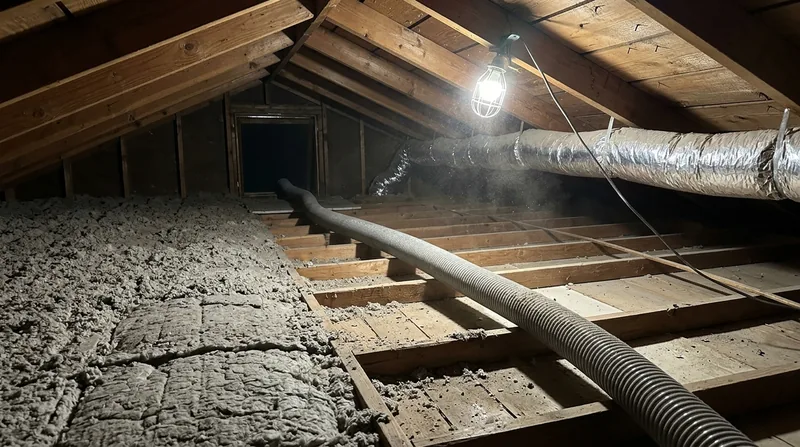




Old insulation in Austin attics takes a beating. Summer heat pushes 140 to 160 degrees through vented attics; winter freezes burst pipes; and decades of settling, moisture, and rodent activity leave blown-in fiberglass and cellulose matted, pipe-soaked, and useless. Before any new insulation removal in Austin happens, the old material has to come out cleanly, with no debris left behind and no contamination spread into the spaces where new foam will go. We vacuum out failed batts and blown-in, cut away failed spray foam that other crews won't touch, and flag vermiculite for testing before it ever gets disturbed. The job is the foundation of every retrofit, and it is the work most installers skip or do badly.
Why Insulation Removal Matters in Austin's Older and Retrofit Homes
Central Austin runs Craftsman bungalows and Victorian cottages from the 1900s to 1940s, many raised on pier-and-beam with open crawl spaces below; East Austin and South Austin hold the same stock, and west of MoPac the hills of Westlake, Lakeway, and Bee Cave sit large homes on steep limestone lots. Those older homes often have original fiberglass batts or cellulose that has settled, absorbed moisture from summer humidity and winter freeze cycles, and become a thermal liability. Newer ranches from the 1950s and 1960s in Allandale, Crestview, Brentwood, and Windsor Park sit over empty wall cavities and flattened attic fill. When you retrofit any of these homes with spray foam, the old insulation must come out first. Leaving it in place traps moisture against the foam, voids the warranty, and leaves thermal gaps that cost you money for years.
- Old blown-in fiberglass and cellulose absorb moisture and compress over decades, losing R-value and trapping humidity.
- Pipe-soaked insulation from winter freezes or summer condensation must be removed to prevent mold growth under new foam.
- Failed spray foam from previous contractors gets cut out cleanly, not buried under new material.
- Vermiculite insulation, which may contain asbestos, gets flagged for professional testing and never disturbed.
- A clean substrate ensures the new foam bonds properly and delivers the R-value and air seal the job is designed for.
Starting with a clean attic or crawl space is the difference between a retrofit that works for twenty years and one that fails in five.
Key info: In Hyde Park and Travis Heights, many homes have original vermiculite insulation in attics. We flag it for professional testing and do not disturb it. Testing is a separate licensed service; removal, if needed, goes to a certified abatement contractor.
For more on the insulation systems we install after removal, see closed cell spray foam insulation in Austin, which delivers the R-value and air seal that retrofit homes need.
You can also check the Austin Building Services Division website for guidance on what permits may apply to your address and whether your HOA has rules on attic work.
How We Remove Insulation in Austin: Step-by-Step
Insulation removal is not demolition. It is precision work that protects the home, the crew, and the substrate where new foam will go. We use industrial-grade vacuum equipment to extract blown-in material without spreading dust into living spaces, cut failed spray foam out by hand with manual tools to avoid damaging framing and roof decks, and inspect every square foot of the substrate before we leave. The job takes a day or two depending on the attic size and the amount of material, and we haul everything off site to a licensed facility.
- We inspect the attic or crawl space and identify all insulation types, moisture damage, and any contamination.
- We set up containment and mechanical ventilation to protect your home and the crew during removal.
- We vacuum out all blown-in fiberglass, cellulose, or mineral wool using industrial equipment and sealed containers.
- We cut out failed spray foam by hand, removing it in sections without damaging the substrate.
- We remove any pipe-soaked batts and separate debris for proper disposal.
- We flag any vermiculite insulation for professional testing and leave it undisturbed.
- We clean the substrate and inspect it for moisture, rot, or pest damage before you move to the next phase.
Once the space is clean and dry, you are ready for new spray foam or other insulation systems.
Example: A 1960s ranch in Brentwood had 18 inches of settled fiberglass over the entire attic, plus two sections of failed spray foam from a previous contractor. We removed all the old fiberglass in one day, cut out the failed foam carefully to protect the roof deck, and left the space ready for a new sealed attic installation. The homeowner had no odor, no dust in the house, and a clean substrate for the next phase.
Learn more about what comes next: attic spray foam insulation in Austin.
| Removal Method | Description | Best for |
|---|---|---|
| Vacuum extraction | Industrial-grade vacuum system pulls blown-in fiberglass, cellulose, and mineral wool into sealed containers with no spillage into the home. | Standard attics with blown-in or batt insulation that is dry and not contaminated. |
| Manual foam removal | Failed spray foam is cut out in sections by hand using manual tools, protecting the roof deck and framing from damage. | Attics and walls with failed or improperly installed spray foam that previous contractors left in place. |
| Contaminated material removal | Pipe-soaked, rodent-damaged, or moisture-saturated insulation is removed separately and disposed of at a licensed facility. | Attics with water damage from burst pipes, roof leaks, or crawl spaces with moisture history. |
| Vermiculite flagging | Vintage mineral wool insulation is inspected, photographed, and flagged for professional testing. It is never disturbed or removed. | Older homes in Central Austin where original insulation may contain asbestos. |
Insulation Removal Cost in Austin: What to Expect
Insulation removal in Austin starts at around $950 for a small attic (under 500 square feet) with straightforward blown-in material. The cost climbs with attic size, the amount of failed foam to cut out, contamination that requires special handling, and the complexity of access. A 1,200-square-foot attic with heavy settled fiberglass and one or two sections of failed foam typically runs $1,400 to $2,200. Crawl space removal under a larger home can run $1,800 to $3,500 depending on the space size and material type. Travel is included within Austin and surrounding areas, and we do not charge a separate mileage fee.
The biggest cost drivers are the volume of material, the presence of failed spray foam that must be cut out by hand, and whether the material is contaminated or moisture-damaged. Getting two or three estimates from local contractors is smart because removal pricing varies based on how thoroughly each crew approaches the job. The cheapest estimate is often the one that cuts corners, leaves debris behind, or skips inspection of the substrate.
We provide a written estimate on site that breaks down the square footage, the material type, the removal method, and the final price before we schedule the work. No surprises, no hidden fees. For a detailed pricing overview and to request a free estimate, visit our pricing page or call us at (737) 404-4885.
What to Look for When Hiring an Insulation Removal Contractor Near Me in Austin
Hiring a contractor for insulation removal is a decision that affects the quality of every retrofit that follows. The contractor you choose will determine whether the substrate is truly clean, whether contaminated material is handled safely, and whether you are ready for new insulation that works. A good contractor is fully insured, provides a detailed written estimate before work begins, checks references, and explains how they will protect your home during the job. They also respect local permitting and building code requirements at your address.
- Ask for proof of full insurance coverage and verify it is current with the insurer before signing a contract.
- Request a written estimate that specifies the square footage, material types, removal method, and final price.
- Ask for references from recent jobs in your neighborhood, and call at least two to ask about cleanliness, professionalism, and follow-up.
- Confirm that the contractor understands local building code and permitting rules for your specific address.
- Ask how they will protect your home during removal, including ventilation and containment of dust and debris.
- Verify that they haul material to a licensed disposal facility and provide documentation of removal.
- Avoid contractors who promise a price over the phone without seeing the job, or who offer a rate far below market.
A contractor who takes time to inspect your home, asks questions about the insulation type and condition, and provides a detailed estimate is the one who will do the job right.
Ready to schedule a free estimate? Contact us at our contact page or call (737) 404-4885. We will inspect your attic or crawl space, explain what needs to come out and why, and give you a firm price before any work begins. Response within 24 hours, no obligation.
Insulation Removal in Austin: Pricing Guide
| Service | Price | Details |
|---|---|---|
| Small attic removal | Starting at $950 | Under 500 sq ft with dry blown-in fiberglass or cellulose, vacuum extraction, clean substrate inspection included |
| Standard attic removal | Starting at $1,400 | 500 to 1,200 sq ft, settled insulation, possible failed foam sections, manual cutting and vacuum extraction |
| Large attic or crawl space removal | Starting at $1,800 | 1,200+ sq ft attic or crawl space, contaminated or moisture-damaged material, complex access, full substrate inspection |
| Failed spray foam removal | On estimate | Cutting out failed foam from previous contractors requires on-site inspection to determine volume and complexity of work |
| Travel and disposal | Included | No separate mileage or call-out fee within Austin and surrounding service areas, licensed facility disposal included |
| Free estimate | No cost | On-site inspection, written estimate, response within 24 hours at (737) 404-4885, no obligation to book |
Indicative pricing, the exact cost depends on square footage, finish, and site access. Free personalized estimate within 24h at (737) 404-4885.


