The Winter Storm Uri Wake-Up Call for Austin Homeowners
When Winter Storm Uri swept through Austin in February 2021, it exposed a vulnerability that many homeowners didn't even know existed: their attics. Temperatures plummeted to record lows, and homes across the region suffered frozen pipes, burst water lines, and catastrophic interior damage. While most people blamed the weather, the real culprit in many cases was inadequate attic insulation and ventilation.
The storm taught us a hard lesson about the relationship between attic design and home protection. Traditional ventilated attics, which are designed to allow air circulation to reduce moisture and heat buildup, became liabilities during extreme cold. Cold air flowed freely through these spaces, chilling the pipes that run through the attic and the walls below. Homeowners who invested in Attic Spray Foam Insulation with sealed roof decks fared significantly better, maintaining warmer attic temperatures and protecting their most vulnerable plumbing. This experience fundamentally changed how forward-thinking Austin residents approach attic design and insulation strategy.
Understanding Sealed Attics vs. Ventilated Attics
To understand why Winter Storm Uri caused so much damage, it helps to know the difference between two attic designs. A ventilated attic is designed with soffit and ridge vents that allow outside air to flow through the attic space. This approach was developed to manage moisture and heat, particularly in warmer climates. However, when outdoor temperatures drop dramatically, a ventilated attic becomes a direct pathway for cold air to reach your pipes, insulation, and the living spaces below.
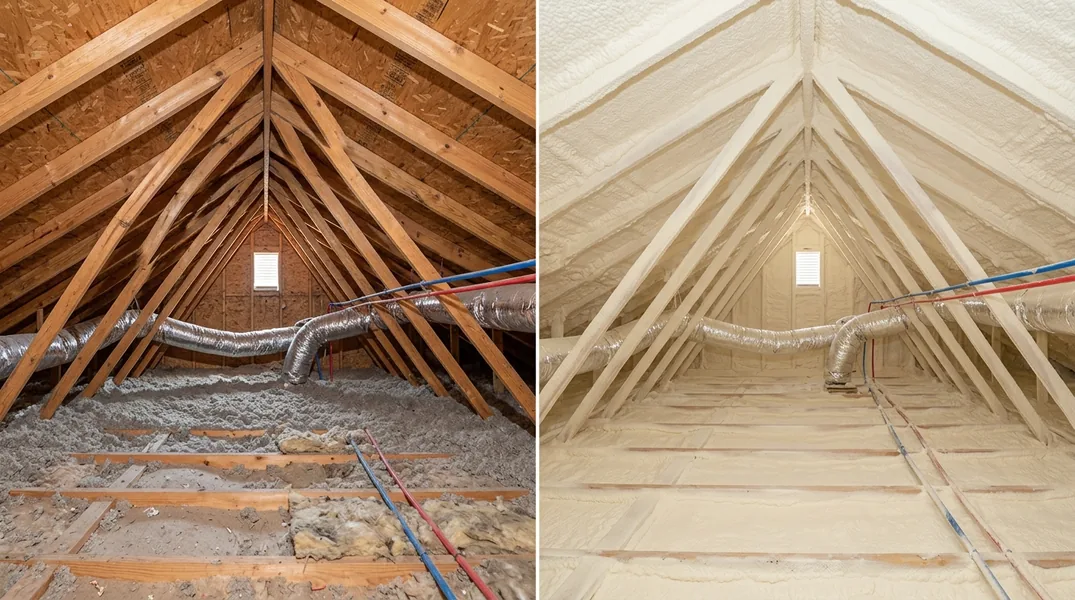
A sealed attic, by contrast, is insulated at the roof deck rather than at the ceiling line. Attic Spray Foam Insulation applied to the underside of the roof creates a thermal barrier that keeps the attic space warm and dry. This approach converts the attic into what's called a conditioned space, meaning it's part of your home's heated and cooled envelope. During a severe freeze, the attic stays warm enough to protect pipes, while the sealed environment also eliminates many moisture-related problems that plague traditional ventilated attics.
The difference became starkly apparent during Uri. Homeowners with sealed attics reported minimal pipe damage, while those with ventilated attics watched helplessly as their plumbing froze solid. The cost of repairing burst pipes and water damage often exceeds the cost of a professional attic insulation retrofit by tens of thousands of dollars.
How Spray Foam Creates a Protective Thermal Barrier
Closed Cell Spray Foam Insulation is the material of choice for creating sealed, unvented attics because of its superior insulating properties and air-sealing capabilities. When sprayed onto the underside of your roof deck, closed-cell foam expands and hardens into a continuous barrier that blocks air infiltration, moisture penetration, and thermal transfer. Unlike traditional fiberglass batts or blown-in cellulose, which have gaps and settle over time, spray foam creates a monolithic seal with an R-value that remains consistent for decades.
The R-value of closed-cell spray foam typically ranges from 6 to 7 per inch, which is significantly higher than open-cell varieties or traditional insulation materials. This means you achieve superior thermal protection with a thinner application, which is particularly valuable in attics where headroom is limited. More importantly, the air-sealing properties prevent the convection currents that allow cold air to bypass traditional insulation. During Winter Storm Uri, this continuous seal meant that the attic temperature stayed closer to the indoor temperature, even as outdoor conditions approached single digits.
The foam also creates a vapor barrier, which prevents warm, moist indoor air from entering the attic and condensing on cold surfaces. This dual benefit of thermal protection and moisture control makes spray foam the most effective choice for homeowners in Austin who want to protect their investment and ensure long-term comfort.
Frozen Pipes and Ice Dams: The Real Cost of Poor Attic Insulation
Frozen pipes were one of the most damaging consequences of Winter Storm Uri, and they're directly linked to inadequate attic insulation. When pipes run through a cold attic or an exterior wall with insufficient insulation, they're exposed to the outdoor temperature. During Uri, when outdoor temperatures dropped below 20 degrees Fahrenheit and stayed there for days, water inside the pipes froze solid. The expanding ice created pressure that burst the pipes, leading to catastrophic water damage inside walls, ceilings, and living spaces.
Ice dams were another common problem exacerbated by poor attic insulation. In a ventilated attic, heat escapes from the living space into the attic, warming the roof deck. When snow falls on a warm roof, it melts. The meltwater runs down to the roof edge, where it encounters the unheated overhang and freezes, creating a dam. Water backs up behind the dam and leaks into the home. With a sealed attic insulated with spray foam, the roof deck stays cold and uniform, preventing this cycle entirely. Snow melts and drains normally, or it doesn't melt at all, eliminating ice dams and the water damage they cause.
The financial impact of these failures is substantial. A single burst pipe can result in tens of thousands of dollars in water damage, mold remediation, and reconstruction. Many homeowners affected by Uri spent $50,000 to $100,000 or more on repairs. A professional Attic Spray Foam Insulation installation costs a fraction of that and provides protection against future freeze events.
Unvented Attic Spray Foam: The Modern Solution for Austin Homes
Unvented attic spray foam represents a paradigm shift in how we approach home insulation and protection. Instead of relying on ventilation to manage moisture and temperature, spray foam attic insulation creates a sealed, conditioned space that functions as an extension of your home's living area. This approach aligns with modern building science and has been endorsed by leading industry organizations and building codes across the country.
The benefits of an unvented attic extend far beyond freeze protection. Because the space is sealed and conditioned, you can safely store items in your attic without worrying about temperature or humidity extremes. HVAC equipment and ductwork installed in an unvented attic operates more efficiently because it's not exposed to outdoor air temperatures. Homeowners often find that their heating and cooling bills decrease noticeably after converting to an unvented attic design. The continuous insulation also eliminates the air leaks that allow conditioned air to escape, which is one of the largest sources of energy loss in typical homes.
From a moisture perspective, an unvented attic eliminates the condensation problems that plague ventilated attics. In winter, warm indoor air naturally rises and carries moisture. In a ventilated attic, this moist air encounters cold surfaces and condenses, leading to mold growth, wood rot, and deterioration of insulation. In a sealed attic, the air is already part of the conditioned space, so there's no condensation. In summer, humid outdoor air can't enter through vents, which is particularly valuable in humid climates. The result is a healthier, more durable attic space that requires no maintenance.
Getting Professional Attic Spray Foam Insulation Near Me: Why Expertise Matters
Installing unvented attic spray foam correctly is critical, and this is not a DIY project. The application requires specialized equipment, training, and knowledge of local building codes. A professional contractor must ensure that the foam is applied to the correct surfaces, that air sealing is complete, and that the installation complies with building codes and manufacturer specifications. Improper installation can lead to inadequate thermal protection, moisture problems, or even structural damage.
When you contact Austin Spray Foam Insulation, you're working with professionals who understand the unique challenges of attic insulation in the Austin climate and have learned directly from Winter Storm Uri's lessons. Our team evaluates your attic's current condition, identifies vulnerabilities, and designs a solution tailored to your home's specific needs. We handle everything from removing old insulation to installing new spray foam, ensuring a seamless transition to a protected, efficient attic space. If you're ready to protect your home and improve its energy efficiency, contact us at (737) 404-4885 or request a free estimate today.
Looking for a professional spray foam insulation contractor in Austin? Austin Spray Foam Insulation responds fast for all your spray foam insulation needs.
Get a Free Quote